
Views: 0 Author: Site Editor Publish Time: 2026-05-31 Origin: Site


Standard electric motors typically operate at peak efficiency in high-speed, low-torque ranges. However, actual mechanical workloads almost always require the exact opposite to move heavy loads safely and effectively. If you force a standard motor to run at low speeds, it overheats rapidly. To solve this fundamental engineering challenge, a Reduction Gear Motor directly integrates a high-speed motor with a mechanical gearbox. This unified design actively multiplies output power while controlling the rotational speed perfectly. It also completely eliminates the frustrating shaft alignment issues commonly found in disjointed, multi-part drivetrains. In this comprehensive guide, we move beyond basic definitions to provide a clear decision-stage evaluation framework. You will learn exactly how to select the correct gear geometry and analyze critical thermal efficiency trade-offs. We will also help you seamlessly match specific motor configurations to your exact physical payload and operational environmental requirements.
VFDs are not replacements: While variable frequency drives (VFDs) reduce speed, they cannot multiply torque. Mechanical reduction is mandatory for heavy-load applications.
Geometry dictates performance: Classification by axis geometry (parallel, right-angle, coaxial) is the most accurate way to shortlist motors for space-constrained footprints.
Efficiency varies by design: Planetary and helical gears often exceed 90-95% efficiency, whereas high-ratio worm gears can drop to 70% due to thermal losses from sliding friction.
Procurement and design engineers must first classify options based on shaft orientation. You need to determine the spatial fit before you evaluate torque ratings. The physical envelope of your machine often dictates which gear family you can realistically implement on the factory floor.
Parallel shaft setups align the motor shaft directly with the output shaft. They offer exceptional reliability for standard industrial uses.
Helical Gear Motors: These feature angled teeth that engage gradually. This specific design delivers exceptionally smooth power transmission. You get low noise and high efficiency exceeding 90%. They are ideal for continuous-duty systems like large-scale mining conveyors and packaging lines.
Spur Gear Motors: These utilize simpler, straight-cut teeth. They are very cost-effective but generate noticeably higher noise levels during operation. They suit lower-speed, less demanding commercial environments where acoustic control does not matter.
Right-angle drives bend the power transmission at a strict 90-degree angle. They save enormous amounts of lateral space in tight machinery cabinets.
Bevel Gear Motors: These transmit power efficiently around a sharp corner. They become essential when your footprint strictly prohibits a long, inline motor layout.
Hypoid Gear Motors: These resemble bevel designs but use non-intersecting axes. They allow for a much higher tooth contact area. This results in extremely quiet operation and enhanced durability under heavy, continuous loads.
Worm Gear Motors: These deliver massive reduction ratios within incredibly tight spaces. They feature an inherent "self-locking" capability that prevents backdriving. However, you must accept a significant mechanical trade-off. High sliding friction generates substantial heat. This physical reality caps their mechanical efficiency around 70-80%.
Coaxial drives keep the input and output shafts perfectly aligned on the exact same axis. They provide highly symmetrical load distribution.
Planetary Gear Motors: These distribute the mechanical load across multiple planetary gears. These smaller gears rotate around a central sun gear. This mechanism offers the highest torque density available for its compact size. You will find them mandatory for precise positioning and advanced robotic automation.
Cycloidal Gear Motors: These utilize rolling pin-and-disc mechanics instead of standard rigid gear teeth. They are highly shock-resistant. They offer an exceptional lifespan and handle sudden impact loads beautifully. Their initial capital expenditure is higher, but they rarely fail under severe stress.
Strain Wave (Harmonic) Gears: These feature nearly zero backlash and extremely low inertia. They rely on an elliptical wave generator continuously deforming a flexible spline. Engineers strictly reserve them for ultra-precise micro-motor uses. You see them frequently in aerospace instrumentation and surgical medical devices.
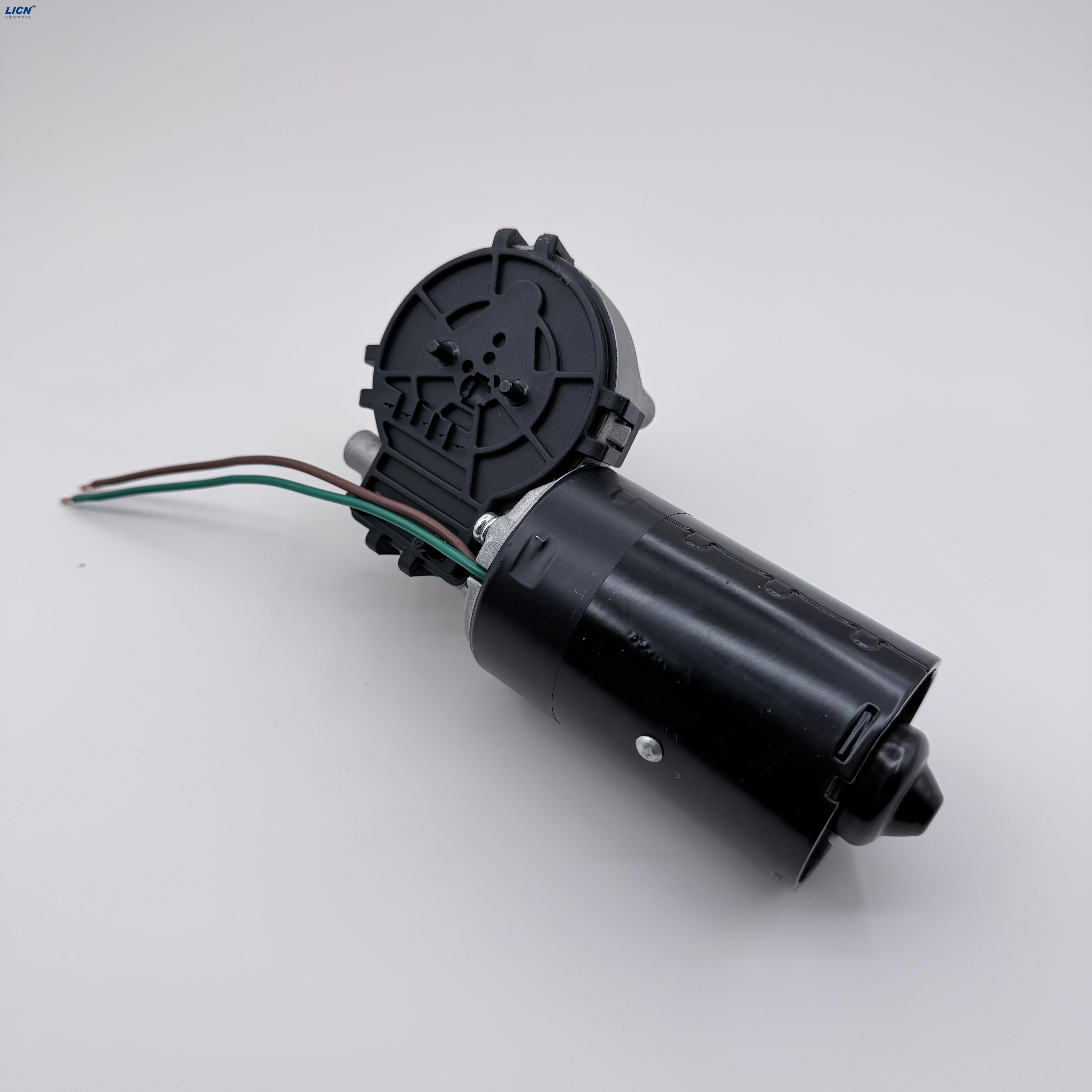
Selecting the best drive involves balancing conflicting mechanical properties. You cannot maximize every operational metric simultaneously without making compromises.
Mechanical advantage forms the core engineering principle of power transmission. Halving the speed range theoretically doubles the available output torque. This physical law allows a small, highly efficient motor to move massive physical loads safely. You willingly trade unnecessary rotational speed for raw, controlled pushing power.
We determine the required gearing by using a highly standardized baseline formula. Input RPM divided by Output RPM equals the target Reduction Ratio. For example, a 3000 RPM motor driving a 100 RPM load mathematically requires a 30:1 ratio. Proper calculation prevents catastrophic failures.
Common Mistakes: Specifying the wrong ratio causes immediate system breakdowns. Under-reduction leaves the motor struggling against the load, causing severe electrical overheating. Over-reduction creates a mechanical system bottleneck, moving the physical load far too slowly for your production requirements.
Mechanical transmission is never completely perfect. Friction always turns some valuable kinetic energy into waste heat. Planetary gears often achieve a 98% single-stage efficiency due to smooth rolling contact. Conversely, worm gears experience a steep efficiency drop under load. When their lead angles approach 15 degrees, sliding friction completely dominates the system. The gearbox acts almost like a brake, losing up to 30% of its generated power as thermal heat.
Sudden operational shocks easily destroy fragile drivetrains. Multi-tooth engagement absorbs these violent impacts gracefully. Cycloidal and planetary designs keep multiple teeth meshed simultaneously. This structural choice spreads out the violent force of sudden mechanical stops. Spur gears, however, rely entirely on single-tooth engagement. They take the full brunt of impacts on one fragile point, which drastically increases your maintenance downtime.
Gear Type | Average Efficiency | Shock Tolerance | Best Use Case |
|---|---|---|---|
Planetary | 95% - 98% | High | Robotics & Precision Control |
Helical | 90% - 95% | Medium | Continuous Conveyors |
Worm | 70% - 80% | Low to Medium | Hoists (Self-Locking Needs) |
Cycloidal | 85% - 90% | Very High | Heavy Impact Machinery |
Different physical environments demand entirely different mechanical traits. You must pair the internal gearbox geometry to your specific external workload to ensure reliability.
Helical and cycloidal units serve as the recognized gold standard for continuous, heavy-duty applications. They reliably power long-distance aggregate conveyors and massive factory lifters. Engineers prioritize long-term mechanical reliability and minimal energy waste in these demanding setups. Their high operational efficiency prevents factory power grids from overloading during peak production hours.
Overhead factory cranes and cargo hoists face a highly unique danger. If the power suddenly fails, the heavy load could plummet to the floor. Worm gear configurations are specifically chosen for any vertical lifting industrial application. Their natural self-locking trait acts as a reliable mechanical fail-safe. The steep gear angle physically prevents suspended loads from driving the motor backward during an unexpected power loss.
Industrial robotic arms require exacting, microscopic movements. Planetary and strain-wave variants completely dominate this high-tech space. They meet the strict engineering requirements for high torque density and highly repeatable precision. They feature zero mechanical backlash. This ensures the robotic arm stops exactly where programmed without any unwanted drifting or shaking at the end effector.
We also rely heavily on miniaturized gear reducers for precision consumer and commercial electronics. They smoothly drive automotive power-steering columns, smart door locks, and electronic standing desks. These powerful micro-drives prove that gear reduction is not exclusively for massive industrial plants. They bring quiet, perfectly controlled force directly to everyday smart devices.
Selecting the best gear type is only the very first step in the process. You must also successfully navigate critical installation constraints and component sourcing hurdles.
Buying motors and gearboxes separately from different vendors introduces immense risk. Disjointed mechanical systems frequently suffer from slight shaft misalignment. Even a fractional millimeter of misalignment causes severe vibration at high speeds. This vibration predictably leads to premature bearing failure and shattered shaft couplings. Integrated systems seamlessly eliminate this variable completely. The manufacturer perfectly aligns the motor shaft directly into the gear housing during factory assembly.
You must always address your operating environment before purchasing any drive unit. Standard indoor motors fail rapidly outdoors. Outdoor or washdown settings demand strictly tested Ingress Protection (IP) ratings. Agriculture applications and food processing plants require specialized corrosion-resistant housings. They also mandate the use of special food-grade internal lubricants. These features actively protect the exposed transmission elements from aggressive chemical cleaning and high-pressure water jets.
Mechanical gearboxes inevitably add significant length to your entire drive assembly. You must acknowledge this rigid envelope constraint early in your structural design phase. If your axial space is strictly limited, you cannot force an inline helical setup into the machine. You must pivot your design approach immediately. Switch to a right-angle hypoid or bevel configuration to tuck the long motor cleanly alongside the machine frame.
Professional engineers know exactly when to walk away from a specific technology. We build technical credibility by deeply understanding the negative use cases.
Some applications explicitly require maximum shaft RPM rather than high pushing torque. Common examples include industrial centrifugal fans, high-speed fluid pumps, and automotive engine starters. These systems rely purely on sheer velocity to move air or water effectively.
In fluid dynamics and high-speed air movement, adding a mechanical reducer introduces heavy, unnecessary weight. It also adds unwanted mechanical friction and increases your upfront procurement cost. Most importantly, it actively works against your primary engineering goal of high-velocity rotation. For these specific high-speed tasks, a direct-drive standard motor always remains the superior, more logical choice.
Selecting the right drive system requires moving far past basic power requirements. You must actively analyze axis geometry, thermal efficiency constraints, and your strict physical footprint limits.
A properly specified gear unit reduces electrical grid loads significantly. It proactively minimizes misalignment wear and provides a highly stable mechanical advantage for years of continuous operation.
Recommended Next Steps:
Map out your exact target output speeds and operational cycles.
Measure your strict physical space limits inside the machine housing.
Identify any environmental hazards like ambient dust, extreme heat, or water exposure.
Consult with a qualified drive manufacturer to define the precise ratio and ideal gear style.
A: Standard motors output high speed and low torque, requiring external drivetrain components to move heavy loads. Reduction gear motors integrate a mechanical gearbox directly onto the motor shaft to actively lower speed and multiply output torque in one compact unit.
A: No. While a VFD can electronically reduce a motor's speed, it does not create a mechanical advantage. Only a physical gear reduction system can multiply the torque required for moving heavy industrial payloads.
A: Heat generation is tied directly to gear geometry and internal friction. Worm gears rely on sliding friction, which causes higher thermal losses (lowering efficiency to 70-80%). Helical and planetary gears utilize rolling contact, retaining over 90% efficiency and running significantly cooler.
A: Certain high-ratio worm gear configurations cannot be driven backward by the load when the motor is turned off. This acts as a crucial safety feature for applications like overhead hoists or inclined conveyors where loads might fall.


