
Views: 0 Author: Site Editor Publish Time: 2026-02-26 Origin: Site


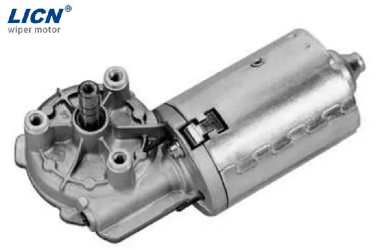
A Reduction Gear Motor (often called a gear motor) is one of those “quiet heroes” inside modern machines. You may not see it, but you feel its effects every day—windows going up smoothly, a garage door lifting without strain, a conveyor moving boxes at a steady pace, or a robot arm positioning parts with repeatable accuracy. The reason a Reduction Gear Motor is so widely adopted is simple: many real-world devices do not need high speed; they need controlled speed and higher torque. By pairing an electric motor with a gearbox, the system trades speed for torque, making motion stable, strong, and easier to control. In this article, we’ll explore what a Reduction Gear Motor is, why it matters, and which devices commonly use it across industries.
A Reduction Gear Motor combines an electric motor with a gear reduction stage so the output shaft rotates more slowly than the motor shaft. This matters because many loads—lifting, pushing, turning, holding position—demand torque more than RPM. When you reduce speed through gears, you multiply torque at the output, helping the device start under load and keep moving consistently without stalling. That torque boost also improves controllability: slower output speed makes it easier to stop precisely, reverse smoothly, or maintain a stable movement rate even when resistance changes (for example, friction, wind load, or varying payload weight). In practical terms, a Reduction Gear Motor helps designers achieve reliable motion with smaller motors, better efficiency, and reduced risk of overheating caused by running a high-speed motor directly against a heavy load.
Although designs vary, most Reduction Gear Motors share the same building blocks: the motor, the gearbox, and the output interface. The motor may be DC or AC depending on the application, while the gearbox contains gears arranged to achieve a target reduction ratio. The output shaft connects to the mechanism—linkages, pulleys, worm drives, or direct couplings. Inside, bearings support rotating parts, and seals help protect the gear train from dust and moisture. The housing is not just a shell; it influences heat dissipation, rigidity, and noise behavior. For many devices, engineers also care about efficiency, backlash (free play), and durability under cyclic loads, so material choices and lubrication quality become crucial. In short, the structure is designed to convert electrical energy into controlled mechanical motion that can handle real-life operating conditions.
Automotive systems are one of the most common places to find a Reduction Gear Motor. Windshield wipers need stable, repeatable motion in rain, snow, and varying friction conditions. The wiper mechanism must move at a controlled rate, and the motor must supply enough torque to overcome water drag, ice buildup, or aging blades. A Reduction Gear Motor provides this by delivering higher torque at a lower output speed, helping the wiper sweep consistently without excessive power draw. Window regulators benefit in a similar way: raising and lowering a glass window requires steady torque, smooth speed, and reliable stop behavior at end positions. The gearbox helps prevent sudden speed changes, supports controlled lifting, and improves the user experience by reducing jerks and noise.
Many convenience and comfort features in vehicles also rely on Reduction Gear Motors. Power running boards (electric side steps) must extend and retract under varying conditions—mud, water, temperature shifts, and different user weights. High torque and a controlled movement rate are critical for safety and durability. Powered seat adjusters are another example: they must move precisely, quietly, and repeatedly, often in tight packaging constraints. Gear reduction enables the motor to run efficiently while delivering enough torque for seat rails, recline mechanisms, and height adjustments, all while maintaining smooth acceleration and reliable positioning. These systems illustrate why gear motors are favored when controlled motion and real-world robustness matter.
Factories and warehouses rely heavily on conveyors and material handling equipment, and a Reduction Gear Motor is often central to these systems. Conveyors typically need low-to-medium speed with consistent torque to move products at predictable rates. When load increases—heavier boxes, higher friction, start-stop cycles—a gear motor helps keep motion stable without oversizing the motor dramatically. Additionally, gear reduction supports controlled starts and stops that reduce product shifting and belt stress. In many lines, uptime is everything, so durability and ease of maintenance also drive the choice of gear motors, especially in continuous or near-continuous operation environments.
Automation and robotics demand accuracy and repeatability, and a Reduction Gear Motor contributes directly to both. Robot joints and positioning devices often need precise movement at controlled speeds, sometimes holding a position under load without drift. Gear reduction improves torque and makes it easier to regulate speed for delicate tasks, such as placing components, tightening fasteners, or aligning parts on an assembly line. While high-end robots may use specialized gear systems, the underlying concept remains: a motor alone is usually too fast and lacks the torque profile needed for direct actuation. A Reduction Gear Motor helps translate electric power into stable, controllable mechanical motion suited for precision work.
A garage door opener is a classic example of a device that benefits from a Reduction Gear Motor. The door is heavy, often unbalanced by weather or wear, and needs high starting torque to begin moving. At the same time, speed must remain controlled for safety. Gear reduction allows the motor to deliver strong torque at a low output speed, enabling smooth lifting and lowering without sudden jumps. This also improves reliability because the system is less likely to stall under load, and it helps the opener operate more quietly—an important factor in residential settings.
Smart furniture, adjustable beds, and massage chairs commonly use compact gear motors for quiet, controlled adjustments. These devices must move slowly and smoothly to feel comfortable, and they often require enough torque to lift body weight or maintain a set position. Gear reduction also supports better positioning accuracy, so the furniture can stop where the user wants rather than overshooting. Because these products are used indoors, noise and vibration are major considerations, making well-designed gearboxes and stable motion control especially valuable.
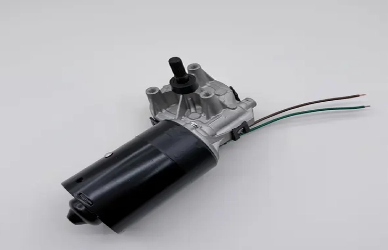
Agricultural equipment works in challenging conditions—dust, moisture, vibration, and irregular loads. Many mechanisms in harvesting and planting systems require consistent low-speed movement with high torque, such as feeders, small conveyors, positioning components, and actuator-like functions. A Reduction Gear Motor helps deliver that torque while keeping motion predictable, which reduces mechanical shock and wear. Since maintenance windows can be limited during peak seasons, the durability advantage of a properly specified gear motor becomes a significant practical benefit.
Heavy-duty machinery and utility vehicles often include auxiliary systems that need strong, controlled motion: small lifting mechanisms, positioning arms, access steps, covers, and powered adjustments. These systems are frequently exposed to harsh environments and intermittent heavy loads, which makes torque reserve and robust construction essential. Gear motors help provide the force needed without demanding an oversized high-current motor, and they support stable movement that improves safety and reduces component stress.
As new energy infrastructure grows, automation plays a larger role in charging stations, battery handling, and equipment positioning. Automated handling systems need consistent, repeatable movement—often at low speeds with high torque for lifting or aligning components. A Reduction Gear Motor is a practical solution because it balances compact size with strong output capability, and it supports controlled motion that reduces the risk of misalignment or mechanical impact. In many systems, reliability and predictable operation are more important than raw speed, which aligns perfectly with gear motor advantages.
Solar tracking systems adjust panel angles slowly over time to follow the sun. This is a textbook use case for reduction gearing: extremely low output speed, steady torque, and the ability to hold position against wind loads. Smart energy devices may also require controlled actuation—valves, dampers, small positioning mechanisms—where stability and efficiency are key. Reduction Gear Motors can be selected with appropriate protection levels and long-life designs to match outdoor operating demands.
A Reduction Gear Motor helps match motor operation to real load requirements. Instead of forcing a high-speed motor to fight a heavy load directly, gear reduction allows the motor to run in a more efficient region while delivering usable torque at the output. This can reduce energy waste, improve thermal behavior, and extend component life. Controlled speed also helps systems avoid unnecessary acceleration and deceleration stress, improving both mechanical reliability and overall system efficiency.
Real devices face dust, moisture, temperature swings, vibration, and repeated cycles. Reduction Gear Motors are often engineered with protective housings, sealing, robust bearings, and suitable lubrication to survive these conditions. When properly selected—considering load, duty cycle, environment, and required lifespan—a gear motor can provide years of stable performance. This is why they appear across such a wide range of industries: they are adaptable, dependable, and practical for production-scale solutions.
A standard motor outputs higher speed with lower torque, while a Reduction Gear Motor uses a gearbox to lower speed and increase torque for controlled, load-capable motion.
Start from the required output speed and torque at the mechanism, then select a reduction ratio that lets the motor operate efficiently while meeting load demands under worst-case conditions.
Yes, many are designed for continuous or long duty cycles, but selection should consider thermal limits, duty rating, load profile, and proper lubrication to ensure long-term reliability.
Key factors include load level, shock impacts, duty cycle, temperature, sealing against contamination, lubrication quality, and alignment between the motor, gearbox, and driven mechanism.
From automotive comfort features to industrial conveyors, from garage door openers to solar trackers, the Reduction Gear Motor is widely used wherever devices need higher torque and controlled speed. Its ability to convert fast motor rotation into practical, stable mechanical motion makes it a core component in modern design. If you’re evaluating a device or developing a new product, understanding where and why gear motors are used is a strong first step toward choosing the right drive solution for performance, reliability, and cost-effective production.


