


A Wiper Motor serves as a critical electromechanical component in modern vehicles and machinery. It actively drives complex linkage systems to clear rain, snow, and environmental debris from visibility shields. Without this reliable motion, maintaining safe operation in adverse weather becomes impossible. Selecting or replacing the right unit requires careful evaluation. You must balance electrical draw, physical footprint, and torque output against specific environmental stressors. Designers face unique challenges when dealing with heavy snow loads, corrosive marine salt spray, or harsh factory dust. Choosing incorrectly can lead to rapid mechanical failure or unsafe operating conditions. This article provides a comprehensive technical breakdown of core component mechanics. We explore vital diagnostic failure criteria to help you extend equipment lifespan. Finally, we deliver strict specification guidelines designed to support sound automotive, maritime, and commercial purchasing decisions.
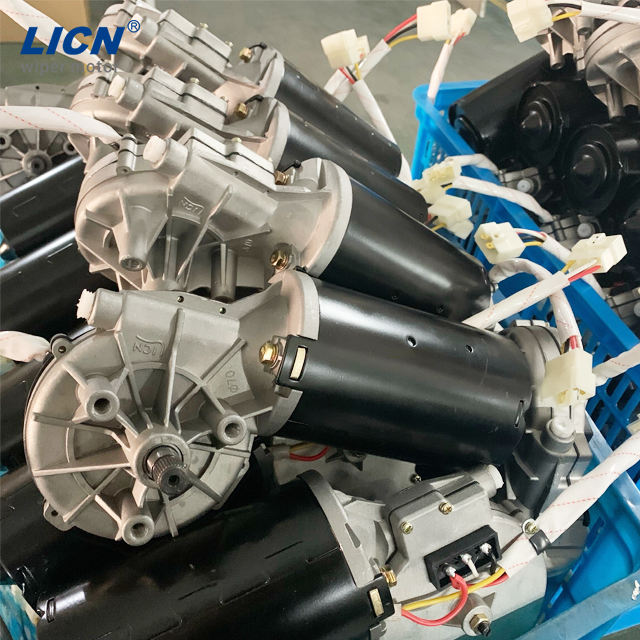
Mechanical Foundation: Relies on a high-speed DC motor paired with a worm gear assembly to convert velocity into reliable, high-torque sweeping motions.
Evaluation Metrics: Procurement hinges on matching voltage (typically 12VDC or 24VDC), rated vs. stall torque, and operating amperage to the designated load.
Implementation Reality: Proper installation strictly requires a "dry run" to establish the self-parking baseline before connecting linkage systems, preventing structural damage.
Cross-Industry Utility: Beyond traditional automotive uses, sealed and modified units serve as high power actuators in marine, robotic, and industrial applications.
The system relies on a straightforward yet highly effective electromechanical conversion process. At its core sits a permanent magnet DC motor. When you apply direct current, the internal armature spins rapidly. This raw rotation often exceeds several thousand revolutions per minute (RPM). However, high RPMs cannot clear glass effectively. To solve this, engineers couple the output shaft to a reduction worm gear assembly. This design brilliantly trades high velocity for essential low-speed, high-torque output. The worm gear acts as a multiplier. It provides the immense twisting force necessary to push heavy rubber blades across wide glass panels.
Different weather conditions demand variable operating speeds. Manufacturers achieve multi-speed functionality through two primary methods. Traditional designs use a mechanical brush system. They place multiple electrical brushes against the motor commutator. A common ground brush pairs with dedicated low-speed and high-speed brushes. By shifting the active current path to a brush positioned differently along the magnetic field, the unit alters its RPM. Modern or specialized designs often replace these mechanical layouts with electronic controls. They utilize Pulse Width Modulation (PWM) combined with H-bridge circuits. PWM technology pulses power on and off rapidly. This approach allows seamless, infinitely variable speed regulation without physical brush wear.
Stopping the blades abruptly in the middle of a windshield creates a severe visibility hazard. To prevent this, engineers integrate a self-parking circuit. This mechanism features an internal rotary switch. A brass contact ring inside the gear housing maintains electrical current even after you switch off the main dashboard control. The blades continue sweeping until they reach the designated bottom-of-glass rest position. Once the internal gear rotates to a specific physical gap in the brass ring, the electrical circuit breaks. The system cuts power instantly. This ensures the linkage assembly always parks the arms safely out of your line of sight.
Mechanical overload ranks as the primary cause of premature failure. Users frequently subject their systems to excessive external resistance. Turning on the unit to clear heavy, wet snow or operating it on completely dry glass generates massive mechanical drag. This resistance travels down the linkage arms directly into the gear housing. Standard consumer units utilize nylon internal gears to reduce operating noise. Under extreme stress, nylon acts as a mechanical fuse. The gear teeth strip entirely to prevent catastrophic motor burnout. Recognizing this vulnerability, heavy-duty variants now shift toward metal or fiberglass-reinforced gears.
Electrical degradation manifests through several distinct symptoms. You must monitor these warning signs to prevent unexpected failures.
Blown Inline Fuses: This represents a protective response. When the motor stalls against heavy resistance, amperage spikes. The fuse blows to prevent electrical fires.
Burnt Internal Windings: Sustained operation under high heat or slight over-voltage conditions slowly melts the protective coating on copper windings. This leads to internal short circuits.
Worn Commutator Brushes: Continuous friction eventually degrades carbon brushes. You will notice intermittent hesitation or dead spots as the brushes lose contact with the commutator.
A specific and highly common failure involves the loss of intermittent sweeping or self-parking functions. When blades stop mid-cycle or lock into a single continuous speed, the core engine usually remains healthy. Instead, you must identify a failure within the parking switch mechanism or the external electronic control module. The internal brass contact ring can accumulate grease, carbon dust, or corrosion. This contamination prevents the circuit from sensing the "park" gap. In complex vehicles, a degraded external relay can also fail to route the required parking current.
Evaluating physical output requires a clear understanding of torque metrics. Buyers must differentiate between rated torque and stall torque. Rated torque defines the continuous operating capacity. For instance, a standard unit might comfortably produce 50 in-lb of torque during normal rain. Stall torque, however, measures the maximum force exerted before the armature stops spinning entirely. You must specify a high stall torque, often exceeding 170 in-lb, for commercial environments. This overhead ensures the system can handle worst-case environmental loads, like frozen sleet, without immediately burning out.
Electrical compatibility dictates the baseline requirements for any procurement cycle. You must establish strict alignment with the existing electrical architecture. Passenger vehicles universally employ 12V networks. Commercial buses, heavy construction equipment, and maritime vessels generally rely on robust 24V networks. We also see specialized stepped-down 5V systems utilized in sensitive robotic applications. Operating currents fluctuate heavily based on the applied load. A healthy, unobstructed sweep typically draws between 1 and 5 Amps. However, a jammed linkage mechanism can easily spike current draw up to 15 Amps.
Cabin comfort and environmental survival represent non-negotiable procurement factors. Acoustic performance requires strict monitoring. Standard operating noise thresholds should remain below 45 decibels to prevent driver fatigue in enclosed cabins. Environmental protection requires evaluating Ingress Protection (IP) ratings. A low IP rating guarantees rapid failure in harsh climates.
Specification Category | Standard Duty (12V) | Heavy Duty (24V) |
|---|---|---|
Nominal Voltage | 12V DC | 24V DC |
Normal Operating Draw | 1.5 - 3.0 Amps | 2.0 - 5.0 Amps |
Stall Current Spike | Up to 15 Amps | Up to 25 Amps |
Stall Torque Limit | 170 in-lb | 350+ in-lb |
Minimum IP Rating | IP54 (Dust/Splash) | IP66/IP67 (Washdown/Immersion) |
Procuring components for the automotive sector demands precise attention to linkage geometries. Manufacturers design systems for specific sweep patterns. Tandem sweeping moves both blades in the same direction simultaneously. Opposed sweeping pushes the blades outward from the center of the glass. The aftermarket replacement must feature the exact standard form factor, bolt pattern, and shaft angle for direct fitment. Purchasing a unit with an incorrect sweep angle will cause the linkage arms to bind against the vehicle chassis.
Boats and offshore platforms introduce brutal environmental stressors. Standard designs fail rapidly when exposed to maritime conditions. High humidity and pervasive salt spray trigger aggressive galvanic corrosion. Maritime-specific applications mandate heavy-duty sealing techniques against water intrusion. Factories address this by deploying epoxy-coated external housings. They utilize solid stainless steel output shafts to eliminate rust. Upgraded internal rubber gaskets and sealed electrical connectors ensure saltwater cannot reach the sensitive armature windings.
Engineers actively look beyond vehicle windshields. They frequently repurpose these rugged units for complex automation projects. A sealed, high power unit serves as a brilliant linear or rotary actuator. The industrial sector favors them because they offer high market availability and an exceptional cost-to-torque ratio. Furthermore, their simple two-wire or three-wire DC configurations allow for effortless polarity-reversing capabilities. Builders easily integrate them into custom conveyor belt guides, automated ventilation louvers, and bespoke robotic drive systems.
Skipping essential calibration steps during installation creates severe risks. You must prioritize a specific "dry run" sequence to establish the self-parking baseline. Follow these standardized implementation steps strictly:
Mount the Housing: Secure the main body to the firewall or chassis bracket. Do not attach any linkage arms yet.
Connect the Harness: Plug the electrical connector into the vehicle's wiring network.
Cycle the Power: Turn the dashboard switch on, let the unit run for five seconds, and then switch it off.
Confirm Rest Position: Allow the internal brass ring to find its exact parking spot. The output shaft is now correctly aligned.
Attach the Linkage: Only now should you bolt the wiper arms onto the shaft in their horizontal resting position.
Failing to execute this calibration can drive wiper arms aggressively backward into the metal cowling. This error routinely bends expensive linkages or cracks the windshield glass.
Custom fabricators and aftermarket installers must respect mechanical geometry. Many custom builds utilize straight-shaft universal motors. You must clarify the strict 1:1 ratio limitation associated with these models. A single-motor-to-single-arm direct drive works perfectly for small flat windows. However, you cannot attach a direct-drive shaft to a complex, multi-arm linkage network. Doing so alters the leverage ratio, exponentially increasing resistance and causing immediate motor stall.
Testing electrical limits requires caution. Engineers often attempt unchecked reverse-polarity testing to run mechanisms backward. While a standard DC armature will happily spin in reverse when you flip the positive and negative leads, the surrounding hardware might not survive. The integrated worm gear housing features specific thrust bearings and angle designs. These structures are optimized for forward motion. They may not be structurally rated for high-load reverse thrust. Sustained reverse operation can fracture the internal nylon gears or blow apart the metal end-caps.
Selecting the optimal wiping solution requires a disciplined engineering approach. Your final decision matrix should prioritize stall torque limits to guarantee performance during severe weather events. You must verify the material durability of internal gears, opting for metal or reinforced composites in high-stress environments. Exact OEM dimensional fitment remains crucial to prevent linkage binding and installation headaches.
Before executing a purchase order, take actionable next steps. Verify your machinery's operating voltage to ensure electrical compatibility. Confirm the exact linkage connection styles required by your application, such as splined shafts versus threaded M-6 mounts. Finally, always source your components from reputable Tier-1 manufacturers or trusted aftermarket suppliers to secure reliable, long-lasting operational performance.
A: Automotive replacement parts generally range from $90 to $225. This price variation depends heavily on the vehicle make and motor complexity. Keep in mind that this benchmark excludes labor. Professional installation typically requires 1 to 2 hours of standardized mechanic labor, which significantly increases the final repair bill.
A: Yes, but it involves strict limitations. Converting a basic unit requires either internal hardware changes, like installing additional contact brushes, or deploying external electronics. Most engineers prefer connecting an external Pulse Width Modulation (PWM) controller to the circuit. This safely regulates voltage delivery to achieve variable speeds without opening the sealed casing.
A: Nylon gears represent a calculated engineering tradeoff. Nylon runs significantly quieter than steel, preventing cabin noise. More importantly, it serves as a mechanical "fuse." If blades freeze to the glass, the inexpensive nylon gear strips safely. This intentional failure protects the more expensive linkage arms and motor windings from catastrophic damage.
A: Yes, you can run it on a lower voltage, such as 5VDC. However, you must understand the linear relationship involved. Lowering the voltage proportionally reduces both the RPM and the overall torque output. While it functions safely, the system will operate much slower and handle far less physical resistance.


